Friday, June 13, 2014

Easy Peasy Trellises

IMG_3245 IMG_4246 IMG_4247 IMG_4245

With a small property but a big desire to grow a large variety of plants, I need to be creative with my space. Growing plants vertically, especially the vining type is a great way to utilize space. Trellises get plants up off of the ground preventing rot as well as being nibbled on by insects and creatures plus you’ll get help from bug-eating birds that use trellises as hunting perches.
Disease problems are minimized because plants receive better air circulation. Harvesting is easy and crops stay cleaner because they are suspended above the soil surface.

This year I am growing as many cucumbers as possible since it is a favorite in our home. Not only do I love the look of edibles growing in harmony with my ornamentals but I love how the trellises create height, texture and a sculptural presence in the garden.

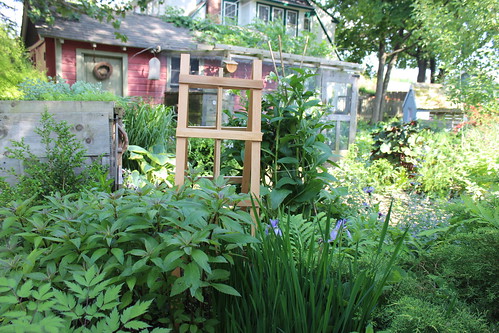
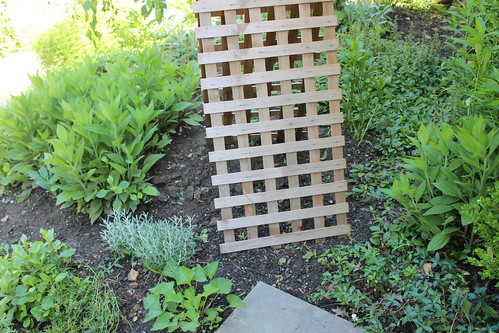
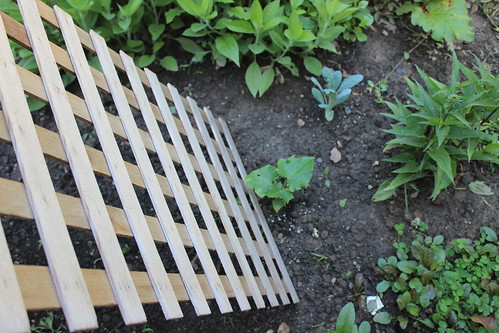
The trellises shown above are very simple to make and affordable too. With just a few pieces of lattice found at your local garden or hardware store and some wire you can have a handmade trellis in a matter of minutes.

My pieces of trellis were cut to 40"X20" and wired together at the top to create an A-frame structure.

I placed one in the back garden in part shade and one up front in full afternoon sun. It's a race to see who will win and produce the first cucumber of the season!

Thursday, June 12, 2014

Squash


Summer squash

I talked about zucchini plants in a pot in a former post. Here they are!
We were waiting to see how they were doing. I decided to try them in containers, every year squash bugs would just destroy the plant from the roots. I am hoping the bugs live in the soil and won't find the plant, I used potting soil and compost from a nursery. I purchased 25 gallon pots made from degradable fabric containers on eBay. ( they were really cheap ) Zucchini need a lot of space. 


They are doing great for now and are about to bloom. I planted some Italian zucchini and some round zucchini, I like those to cook them stuffed in the oven.

Winter squash

I know it is hard to think of the fall while anxiously watching your tomato plants and wanting the fruit to be ready but you will be so happy to enjoy your winter squash!
This year we planted some “potimarron” or "potiron".  They are a gourd that kind of look like a pumpkin but the “meat” is quite different.  They preserve well too. We brought seeds back from France last year.
We are also planting butternut and acorn squash.


As they take up a lot of room we are planting only one plant of each kind, squash are insect-pollinated but they have the male and female flower parts in separate flowers on the same plant, insects transfer pollen from male flowers to female flowers while going from flower to flower. Some people recommend to help them by hand-pollinating them but I will trust the bees.

It makes me come back to the idea of having a bee-hive.


Did you plant any squash ? Which ones ?

Tuesday, June 10, 2014

rainy days

It has been raining in Memphis for what seems like two solid weeks- we may be going on a dozen straight days of gray skies and thunderstorms.  The ground is soggy and my chicken yard is a sopping mess.  But wet ground is an excellent time to remove things, so between showers early this morning, I pulled out my late run of radishes that were beginning to bolt and planted more bush beans and basil in their place.
There were a few radishes that were still edible, so I saved those for me and gave the rest to my girls.  The chicken yard, once dry and aged, is a fabulous source of compost materials, but today it was slick black mud.  I try to keep the soft bottoms of my girls' feet dry (I know chicken feet look scaly from the top, but the bottoms of their feet are almost as soft as our own!), so I laid down a new layer of straw before I threw down the spent radishes.  They consider both the seeds left in the straw and the radishes quite a treat.


Have you ever grown Alpine Strawberries?  They can be difficult to find, but a friend at one of our farmers market grew some a few years ago, and I've had this particular plant for three years.  One benefit to alpine strawberries, besides how tiny, delicious, and fragile the berries are, is that they clump and don't run like large traditional strawberry plants do.  But as I've been picking the berries near my top bar hive (I need to move the plant this fall, as it is right at the entrance to the hive and my presence there bothers the bees -- I'm blocking their flight path), I noticed little rootlets on some of the stems,  small runners:
  

The other day I trimmed a few of the plantlets and put them in the window box right outside my back door (so I can keep an eye on them).  This morning I pulled a half-dozen more and planted them (next the the green beans and basil) in the raised boxes alongside the back patio.  I hope I can keep them watered over the summer (should it ever stop raining) and watch them develop into decent-sized plants.   I've never had enough alpine strawberries for anything but eating out of hand- maybe next year?

Monday, June 9, 2014

Lavender Lemonade

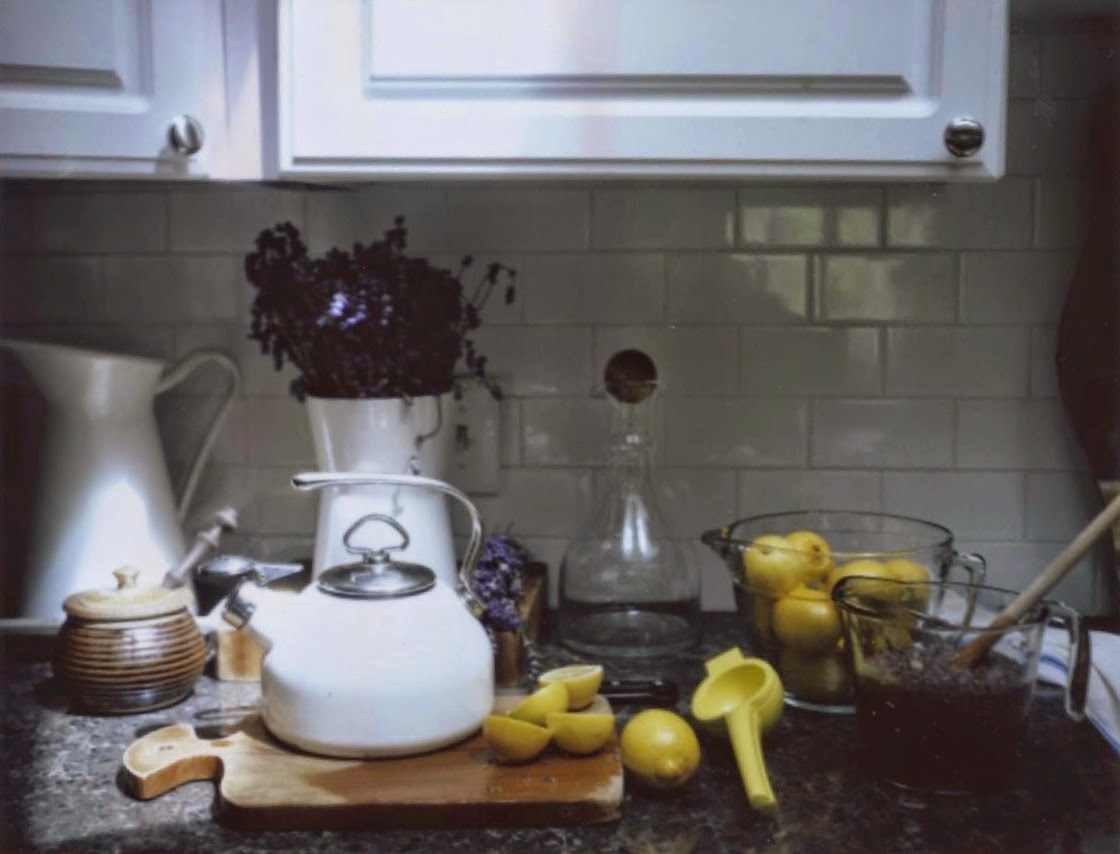
Between my parent's home and mine, we have nearly 30 lavender bushes of different varieties that grow big and happy each summer.  Several of our English lavenders are in bloom right now, so my mom, my boys and I spent the weekend cutting fresh bouquets.  The lavandins are still a little ways off from blooming.  For now, we're enjoying the fresh bouquets hanging from our family room beams.


When I was in college, I worked at a cute little cafe that doubled as an antique store.  It was quaint and filled with all sorts of things that I adored.  I had my first taste of lavender lemonade there and thought it was such a refreshing treat during the hot summer days.  Since then, I make it every summer when lavender is in bloom.  Here's my very simple, very flexible recipe for a sugar-free lavender lemonade.  I hope you're enjoying these late spring/ early summer days, we sure are!


Lavender Lemonade
1 cup hot water
1 cup (about two handfuls) dried or fresh lavender buds
1 cup honey
1 cup fresh squeezed lemon juice
2-3 cups cold water
Start by making a simple syrup of with equal amounts of honey, dried or fresh lavender and hot water.  Let it steep for several minutes.  Add an equal amount of fresh lemon juice.  Dilute to your liking with cold water; I usually add 2-3 times the amount of cold water.  Adjust the sweetness/ tartness by adding more honey, more lavender or more lemon juice.  Enjoy!


Thursday, June 5, 2014

Good Soil - Composting


Growing vegetables in a city can be challenging for different reasons one of them is having good soil.


For those of you who are on a farm in the countryside you might never ask yourself if your soil is good enough because you have splendid vegetables and all the plants you plant grow beautifully.

If some of your plants are not at their best maybe it could be resolved with understanding the plants needs and checking your soil.

We haven’t been able to grow blueberries, a disaster… Even if we tried to get the soil more acidic it died. I want to try again, next year I’ll take the time to understand what was going on. Any tips for blueberries ?


A couple years ago we had our soil tested we were a little nervous about possibly having lead in our yard. But the results showed no lead, we needed to add nutrients some compost but that was it. It wasn’t a big surprise to find out that our soil wasn’t fertilized enough as we are in a city !

Here is a good source of information if you want to have your soil tested you can do it for really cheap. You can ask the cooperative closer to you here or contact a private company as well.


To keep our soil fertile we use a lot of compost from our compost pile and of course the chickens are helping a lot as well.
In your compost pile you can add kitchen waste, grass clipping, weeds, coffee grounds, eggshells any organic material... 

Mulching with hay or leaves is good to keep the soil moist and it will break down quickly and give some nutrients to your soil.
Every fall we do collect leaves from trees and cover the backyard with it for the winter.


Wednesday, June 4, 2014

our patio herb garden


hello, there! i want to take you on a tour of our newest garden addition- our patio herb garden! 

our patio was already built when we moved into the farmhouse. the previous owners were avid gardeners & included this raised garden bed in their patio design. when we moved into our home last summer, huge sunflowers were growing in this space. they were so pretty, but i knew this little bed would be the perfect spot for our kitchen herbs.


you see, i have a hard time remembering to harvest herbs for dinner unless they're close to the kitchen. an onion with a bit of olive oil will be sautéing in the skillet & i will completely forget to add  minced fresh herbs. having our herb garden close to the kitchen makes it easy for me to run out & grab basil or thyme.

in our kitchen herb garden, i planted:

- oregano
- basil
- dill
-cilantro
- lemon balm
- thyme
- sage


of course, an herb garden wouldn't be complete without an old stump, some nasturtiums & a chicken feeder with succulents. 

are your herbs close to the kitchen? do you have them in pots on the patio or in your garden? i'd love to read where your herbs grow!

- natalie


Tuesday, June 3, 2014

spring peas

This last month has been really incredible for peas.  In Memphis, we plant them in February and expect to be eating them by the first of April.  Not so this year. We had a funny (read: cold, icy, windy) spring and the peas that I planted didn't begin to take off until May.  I harvested a few here and there (eating them straight from the vine) until the last few weeks.

Once the peas began coming in, I picked them daily.  We had them in salads, sliced in our lettuce wraps, and for snacking.  I know lots of people freeze their peas, but last year, after I read this blog post, I started thinking about pickles in a big way.  I've always made pickled okra (my favorite bloody mary or cheese plate garnish, Southern style), but pickling other vegetables is relatively new to me.  I may have gone a little overboard in the past week, as I pickled a batch of local cherries and some rhubarb that a friend's mom sent me (because it will only grow as an annual here, and that gets expensive!).  
  

If I were processing these pickles, I would use a tested recipe (and an actual canning jar) for food safety, but as these are just refrigerator pickles, I made a seat-of-my pants batch from a mishmash of recipes I found online (Food in Jars and Smitten Kitchen both have good recipes).


I had just enough peas- topped, tailed, stringed- to pack this old jam jar full.  The brine is half and half white and rice vinegar, with 1 tsp pickling salt and a generous tablespoon of honey (this honey was a gift from my friend and neighbor, Nobuko, for helping to install two packages of bees in her backyard apiary this weekend.  It is so light and floral!).  I'm on a coriander kick lately, so I added the last of my little bag to the brine, plus about a half tsp each of pink and black peppercorns.  Once the brine was boiling, I added my spices and poured it over the peas.  I topped the jar off with ice water, then capped it and tucked the jar in the back of my fridge.  Now I just have to wait. . . .