Showing posts with label spring. Show all posts

Friday, May 15, 2015

Aphids


Recently I noticed my honeysuckle was looking a bit stressed. As I looked a bit closer I saw the tell tale sign of aphids. Several leaves were yellowing and looking a bit distorted and stunted covered in a sticky substance.

Aphids are soft-bodied insects, about a tenth of an inch long. They're typically green or black, though you may also run into gray or black ones in your garden. Aphids suck the sap out of tender plant shoots and leaves. As aphids feed, they secrete a sticky substance, called honeydew, which can quickly become infested with sooty mold. This mold can spread viruses, many of which are incurable. For this reason, it’s important to take steps for controlling aphids in the garden. The good news is if caught early, they are pretty easy to combat.

Killing aphids naturally is not only better for the environment, but it is also a more effective way of killing the insect. Aphids don’t respond well to insecticides, but you can get them under control by taking advantage of their weaknesses and making a few changes in the way you manage your garden.

Aphids have a number of natural enemies. Pampering and nurturing these insects is an excellent method of organic aphid control. I have mint, fennel, dill and yarrow planted about to help attract these insects to my garden which will then feed to on those pesky aphids.

If you have a big enough property,  you can create aphid traps by growing plants that are attractive to aphids. Growing plants such as nasturtium, aster, cosmos, hollyhock, larkspur, verbena, dahlia and zinnia far from other favorite plants will lure aphids away and keep the garden aphid-free.

Another easy way to get rid of aphids is a strong spray of water from a hose which will knock many of the pests off the plant, making it pretty impossible for them to return. It also rinses off some of the honeydew. Spray the plant every day until the plant is aphid free.

Wednesday, May 6, 2015

A new season in our urban garden


It's with a lot of joy I am starting to write this post. I feel I have been waiting for this all winter. Even if I really like the cold it felt it was never ending and I was starting to be so tired of it.

Spring is definitely here and has shown its first colors with crocus, daffodils, trees in bloom, I am already thinking of the delicious fruits we might harvest in the summer.

I contemplate my garden and I imagine all the things we want to do. Every year is different and we learn so much from every season. The shape of the garden is different, the trees, plants are bigger or didn't make through winter.

We already had our first greens for a fresh salad, I have some starts inside waiting to be big enough to be outside, a lot of basil, I guess when I planted the seeds I was thinking of pesto so much!

It's late the windows are opened and I can smell the strong enchanting perfume of our lilac.

What about your garden ?

Happy spring !


Friday, June 13, 2014

Easy Peasy Trellises

IMG_3245 IMG_4246 IMG_4247 IMG_4245

With a small property but a big desire to grow a large variety of plants, I need to be creative with my space. Growing plants vertically, especially the vining type is a great way to utilize space. Trellises get plants up off of the ground preventing rot as well as being nibbled on by insects and creatures plus you’ll get help from bug-eating birds that use trellises as hunting perches.
Disease problems are minimized because plants receive better air circulation. Harvesting is easy and crops stay cleaner because they are suspended above the soil surface.

This year I am growing as many cucumbers as possible since it is a favorite in our home. Not only do I love the look of edibles growing in harmony with my ornamentals but I love how the trellises create height, texture and a sculptural presence in the garden.

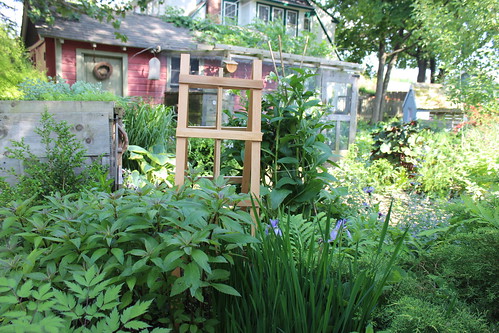
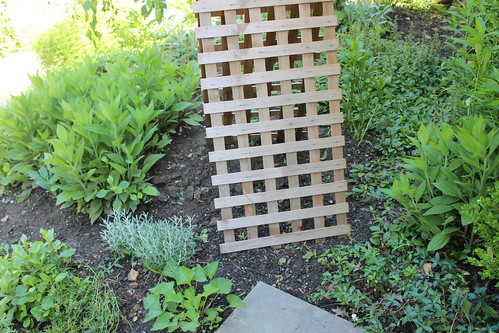
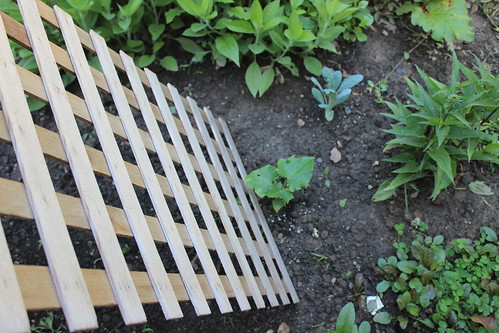
The trellises shown above are very simple to make and affordable too. With just a few pieces of lattice found at your local garden or hardware store and some wire you can have a handmade trellis in a matter of minutes.

My pieces of trellis were cut to 40"X20" and wired together at the top to create an A-frame structure.

I placed one in the back garden in part shade and one up front in full afternoon sun. It's a race to see who will win and produce the first cucumber of the season!

Friday, May 30, 2014

Props in the Garden

IMG_3244 IMG_3090 IMG_3091 IMG_3095 IMG_3097 IMG_3104 IMG_3105 IMG_3108 IMG_3236 IMG_3245

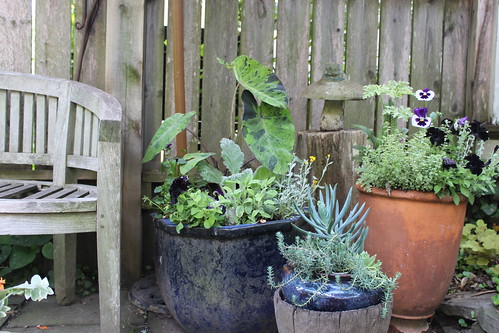
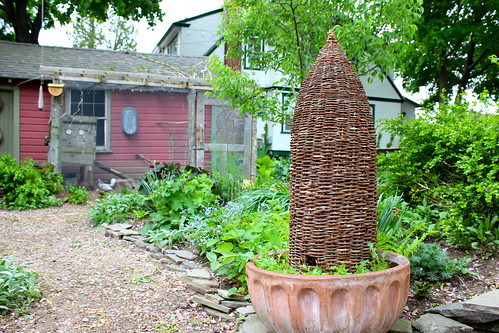
Mother nature creates some of the most beautiful vignettes in the garden. In the wild, little scenes  can happen all on their own but sometimes it's fun to assist when it's in your own backyard. Although a garden is usually composed primarily of plants, adding "props" to your landscape can add character, height, structure, texture and originality.

Over the years I have accumulated all sorts of props. Pots, statues, baskets,  birdhouses, trellises, tree stumps, branches, tools, bamboo, stone and wood have all played a part in my garden's tale.

Many things I have acquired from the woods. Some I have bought or made. Some were gifted and some found on the side of the road in the trash.

As the garden grows and it's scene changes throughout the season, I like to help it's storyline along by moving things around here or there. Just like my home, my garden is forever in flux. I am always re-arranging.

So I urge you to play director in your garden. Walk through and listen to it's story.  Add a few props and give it a costume change now and again.  And most importantly sit back and enjoy the show!

Friday, May 23, 2014

Strawberry Rhubarb Crumble

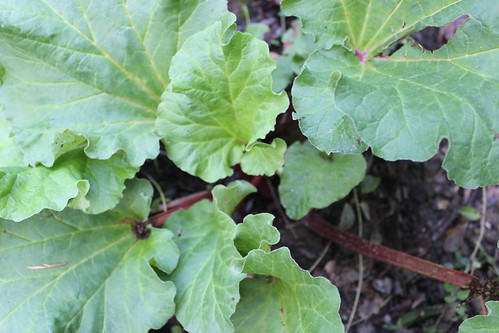
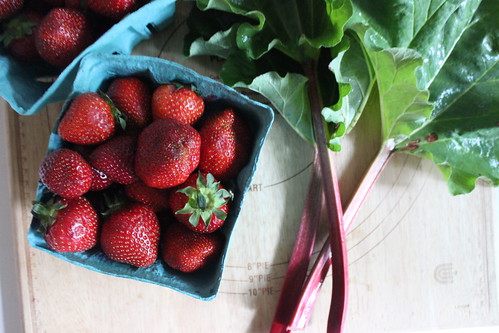
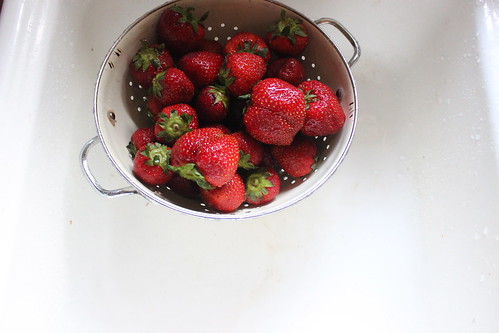
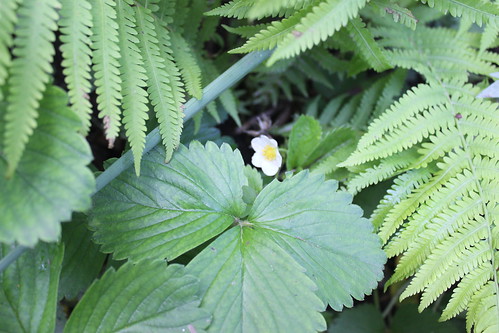
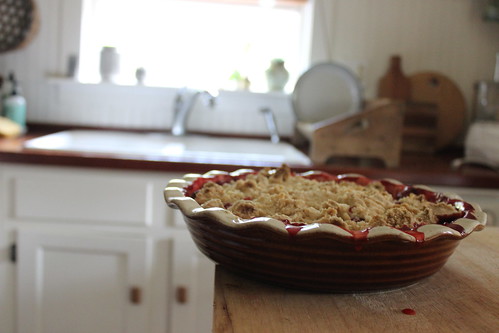
IMG_3157 IMG_3164 IMG_3165 IMG_3169 IMG_3173 We are headed to the beach for the holiday weekend which I thought called for the first strawberry rhubarb crumble of the season. Our strawberries are just flowering so no berries yet but the rhubarb is ready! I bought local berries at the farmers market yesterday and harvested our first rhubarb stalks this morning.

I have made this recipe from Smitten Kitchen many times and it is always a hit. The sweet to tart ratio is perfect topped with a short-bread crumble.

Strawberry Rhubarb Crumble

Topping
1 1/3 cup flour
1 teaspoon baking powder
3 tablespoons sugar
3 tablespoons Turbinado sugar
 Zest of one lemon
1 stick unsalted butter, melted

 Filling
1 1/2 cups rhubarb, chopped into 1-inch pieces
1 quart strawberries plus a few extras, hulled, quartered
Juice of one lemon 1/2 cup sugar
3 to 4 tablespoons cornstarch
Pinch of salt

Heat oven to 375°F.
Prepare topping: In a mixing bowl, combine flour, baking powder, sugars and lemon zest and add the melted butter. Mix until small and large clumps form. Refrigerate until needed.

Prepare filling: Toss rhubarb, strawberries, lemon juice, sugar, cornstarch and a pinch of salt in a 9-inch deep-dish pie plate.

 Remove topping from refrigerator and cover fruit thickly and evenly with topping. Place pie plate on a baking sheet (as it can bubble over), and bake until crumble topping is golden brown in places and fruit is bubbling beneath, about 40 to 50 minutes.

Friday, May 16, 2014

Eggshells in the Garden

over at tend over at tend over at tend over at tend
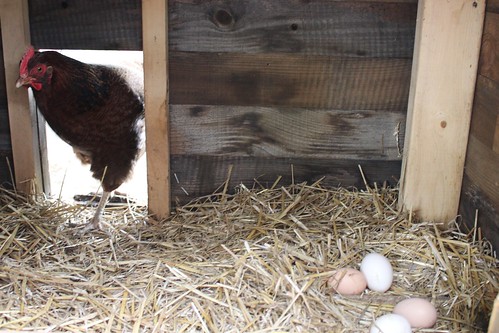
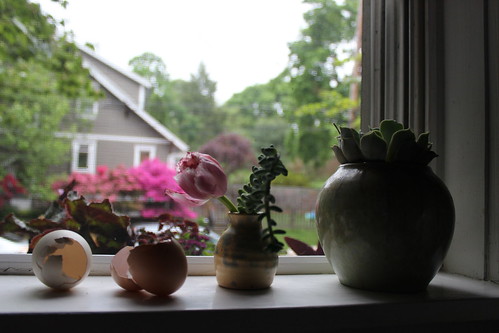
You will always find eggshells drying on my windowsill. They are the "Jack of All Trades" in the garden. And lucky for me my hens provide a steady supply!

Next time you make an omellete set aside those nutrient rich eggshells, which have many uses and can save you money. About 95 percent of shells are made up of calcium carbonate, also present in sea shells, coral, and limestone. The other 5 percent includes proteins, calcium phosphate, and magnesium carbonate.

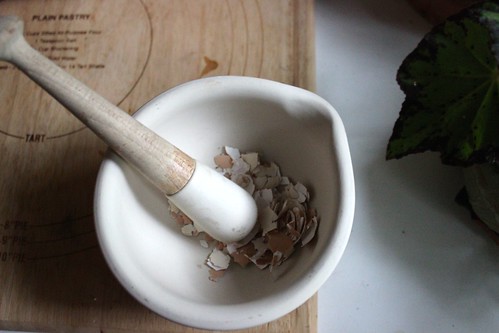
 Always thoroughly wash your shells and allow them to completely dry. Depending on the job egg shells can be applied in crushed or powdered form. Crush them with a mortar and pestle or in a blender or food processor.
 

 ~Add crushed eggshells to the bottom of planting holes, particularly for tomatoes, peppers, and eggplant. These crops are susceptible to blossom end rot, which is caused by calcium deficiency. While this deficiency is most often caused by improper watering, a steady source of calcium is always a plus. As the eggshells break down, they'll nourish the soil, and your plants.

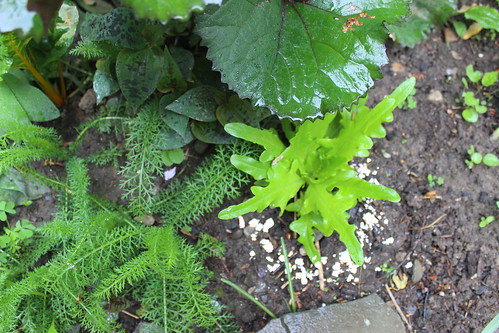
~Use crushed eggshells to deter slugs, snails, and cutworms. The abrasive, sharp edges of the eggshells keep snails and slugs from crossing the shells to get to the plants. I recently made rings around my precious lettuce starts.

 ~Add them to your compost to boost calcium levels in your finished pile.

 ~Rather than using commercial fertilizer, add eggshells to your indoor plants. Add powdered shells directly onto the soil around the base of the plants. Each time you water, the plants will absorb the powder into the soil. This also applies to outdoor potted plants. I plan to add shells to my window boxes this year.

 ~Keep a mason jar of eggshells covered with water for watering potted plants. Or save water from hard boiled eggs to sprinkle plants with this calcium rich tonic.

 ~Hens need plenty of calcium to lay thick-shelled eggs. The best source of calcium for a hen is her own egg shell. Add crushed or powdered egg shells to regular feed to provide a boost of nutrients.

 ~Scattered egg shells can help with cats using your garden as a litter box.

~ If you are feeding birds in your yard, crush up the eggshells and add them to a dish near the feeder. Female birds, particularly those who are getting ready to lay eggs or recently finished laying, require extra calcium.

~Egg shells are also said to keep deer away. Anyone have any luck with this?


Friday, May 9, 2014

Life in the Garden is Always in Focus.

over at Tend tend tend tend tend tend tend tend tend
Sometimes as I wander around my garden it seems as if there is not much new happening out there. 
Now I know that this can not be true but it can feel as if I have on foggy glasses and everything looks a bit out of focus.
This could be a reflection of my own life and how it can feel a bit blurry at times. But life in the garden is never blurry. It is sharp, and crisp and always in focus. We just need to stop and look.

When I am having one of those fuzzy days I like to crouch down low and pretend to be a snail or a fairy (yes I do believe) to find a whole new world, a magical world. When I turn from a giant and get down to the same level as the plants an instant peace takes over me.

The fog lifts and everything is back in focus just like that.

Friday, May 2, 2014

Pop Goes the Garden!

Untitled Untitled Untitled Untitled Untitled over at TEND
We had a wet and rainy week receiving over 5 inches of rain! After the rains stopped and the sun returned, everything seemed to pop. Our Kwanza cherry trees finally bloomed and soon we will have pink snow everywhere (I found a few petals in my bed this morning)

I was so excited to find that the asparagus I had planted last year was up and looking healthy and happy. I am experimenting with growing it amongst other perennials even though it's said to not do well with competition. But I like to break the rules and at least give things a try. I have no choice with my little patch of land. As much as I am dying to try a taste I need to wait until next year to harvest any spears. Patience is key with asparagus. Cut too soon and you can weaken the patch.

We hung our mason bee house this week. Mason bees are incredible pollinators. Each one visits as many as 1000 blooms per day — 20 times as many as a honeybee!

The red leaf lettuce is doing well in a shady spot behind the rabbit hutch. We may be able to harvest a few leaves to add to salads this week or feed to our new little rabbit friends.

Yes, we have two new additions to the garden. Tilly and Lucy are both dwarf Norwegians and have won us over with their sweet and cuddly dispositions. The chickens have some company now!

This week I plan to plant cherry tomatoes along with some cucumbers to grow up that A frame trellis.

What will you plant this week?