Monday, June 10, 2013

Notes from a Northern Garden

Please welcome Jessica Ojala, our guest this Monday while Shari is away!

.

Here in northern Vermont, I feel like I'm lagging far behind the rest of the country, and even the southern part of the state. The last frost date for my area is June 1, which means my garden is really just getting started. Because of our short season, growing things like tomatoes and melons can be a real challenge. It's always a race to see if you can get any red tomatoes before first frost. Watermelons are even more challenging, and yet this year I planted what is by all accounts a preposterous amount of watermelon. If I get melons and they ripen, I'll feel like I've won the jackpot! If not, there's always the rest of the garden to eat.

 One of this year's biggest highlights is that our young plum trees have finally produced plums! I am over the moon about this, and I'm already feeling fiercely protective of these little fruits. Our plum trees end up covered in Japanese beetles every year and we have to continually pick them off to keep the trees from being entirely devoured. In fact, the Japanese beetle problem is what prompted us to start raising hens, in hopes that the hens would eat the beetle grubs that live in the lawn. We've had our hens just about year so I've yet to discover if this will happen or if it's just a wild fantasy. 


Our asparagus is in its fourth year and doing well, but we've started noticing asparagus beetles. From what I've read, an effective way to combat the beetles is to let your hens range amongst the asparagus and do "cleanup". Since our asparagus is part of our larger vegetable garden, we need to fence it off so the hens will be contained and, with any luck, do some pest control. I can't wait to try it out! I'm also told they like to hang out in the shade the asparagus plants make when they feather out. Has anyone had success with having their hens do cleanup duty in the garden?

 Here's Phiona, aka Phonus Bonus, not quite understanding what it is I'd like her to do.


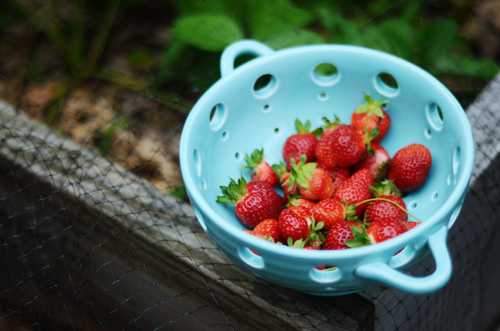
The strawberries are forming and should be ripe within a few weeks. We are thrilled! We planted 50 Sparkle strawberries last summer and it was hard to pinch off the flowers but this year it looks like we'll be rewarded. We need to put up netting very soon!


What do you do when your four-year-old picks all your prize peonies off the bush, each with only two inches of stem intact? Weep, and then float them in a bowl.

Other than asparagus, we don't have much we can actually eat yet except the perennial herbs. The chives are so pretty when they blossom, and though my kids are picky eaters they will inexplicably nibble on chives, mint, lemon thyme, and oregano right off the bush. I think they enjoy grazing in the garden, which makes me want to plant even more herbs!


Apple mint, new to us this year, is delicious tucked into a glass of sparkling white wine. I'm looking forward to many summer evenings with this drink in hand. Cheers!

Saturday, June 8, 2013

thanks to the spring rains

Untitled
it poured rain all day and night on friday. so much that we got nearly 4 inches! the next morning i walked around the garden to see how everything had fared and i swear my garden had doubled in size! it has been a lovely spring here where i have not had to water much at all and everything is growing so lush and beautifully.
Untitled Untitled the strawberry begonias are flowering and spreading like wild fire. i love their dainty little blooms and variegated leaves. they make for a beautiful shade loving ground cover. Untitled
the strawberries are finally ripening and don't really make it into the kitchen these days but rather straight into our  mouths
Untitled  Untitled
the garden in front of the house is filling in nicely with a mixture of edibles and herbs such as rhubarb, zucchini, cherry tomatoes,cucumbers, kale, swiss chard, radish, sage, thyme, santolina and comfrey. they are growing amongst an array of ornamental perennial flowers.
Untitled DSC_1334
we picked up a japanese cucumber and luffah plant in chinatown this weekend to add to the mix.
Untitled
the peaches are growing fast and tempting. each day i cross my fingers that those walking or even driving by will be patient until they are full grown and ripe. hopefully there will be some left for us!
Untitled the gooseberries are plumping up and i plan to make some rhubarb gooseberry jam. Untitled Untitled what's faring well in your garden these days?

Thursday, June 6, 2013

rhubarb ginger syrup

Untitled

over the past few years, rhubarb has become one of my true favorites. of course i love the flavor. but the fact that it is perennial and requires little to no maintenance ranks it high on my list as well. both of the homes i've lived in in minnesota have come with their very own (and very large) rhubarb plants...our current home has two! but most of all what i love is that rhubarb is the first plant to be ready for harvest from the garden. especially after this year's very extended winter. those bright red stalks and huge elephant ear leaves are such a welcome sight in my garden, and my kitchen.

Untitled

i have tried many delicious rhubarb recipes, but one of my favorites is rhubarb syrup. i like to use it to make rhubarb sodas (which is especially exciting this year, given my limited refreshing beverage options!). this year, i modified my recipe a bit with some ginger, and replaced the sugar with honey since we have such an abundance from our backyard bees.

Untitled

Untitled

enjoy!

rhubarb ginger syrup
(adapted from culinate)
(makes about 2.5 cups of syrup)

1.5 cups chopped rhubarb
a few big slices of ginger
3/4 cup honey
1.5 cups water

add all ingredients to a medium saucepan and bring to a simmer. cook for 15-20 minutes (until the syrup turns pink) and strain out rhubarb and ginger pieces. i don't like my soda too sweet so i only add about 1 tbl or so to a glass of sparkling water but you can decide how you like it. you'll notice that once it's diluted, it doesn't look pink anymore. oh well, it's still delicious! this will keep in the fridge for a few weeks. be sure to shake the jar of syrup before each use as the honey will settle. you can also can the syrup, processing as you would for jam. (i've done this before and it is so amazing to enjoy rhubarb soda in the dead of winter!)

Wednesday, June 5, 2013

not for the birds!


today i am here to share with you a simple tip for growing strawberries. 


we have been growing strawberries for several years now, but just recently we have had issues with birds. the birds nibble on the ripe berries, leaving holes in the side, before we have an opportunity to harvest them. so, we purchased a roll of bird mesh netting from home depot for under $8. we cut the netting to size & draped it over our beds. it works perfectly & we have delicious berries! 


i am excited to bake a rhubarb strawberry crisp this week!

Tuesday, June 4, 2013

grow your own mushrooms


This week we started our first set of Shiitake mushroom spawn. We had a few small Alder trees on our property that needed to be removed, and it seemed like the perfect opportunity to start growing our own mushrooms. True hardwoods are a little tough to come by here, but Alder makes a great host for a number of mushroom varieties.


We ordered Pearl Oyster and Shiitake plug spawn (essentially, hardwood dowels inoculated with a particular mushroom species), from Fungi Perfecti. They are located right up in the Puget Sound of Washington. For a company more local to those of you on the east coast, there is also Oyster Creek Mushrooms in Damariscotta, Maine. I have been impressed with Paul Stamets' work for years, so it felt great to support Fungi Perfecti.


The process is pretty simple. Holes are drilled throughout the logs. We used 5 small to mid sized Alder logs in this case, with the holes spaced about every 4-5 inches apart.


Then the dowels are pounded into the holes so they are flush with the surface of the bark.


This step was optional, but we opted for the safer route and heated some beeswax to seal each entry. This protects the interior wood, and minimizes potential competition or disruption to the spawn.


We set the logs in 2 different sites, shady with filtered light, propped off the ground on small cuts of wood.


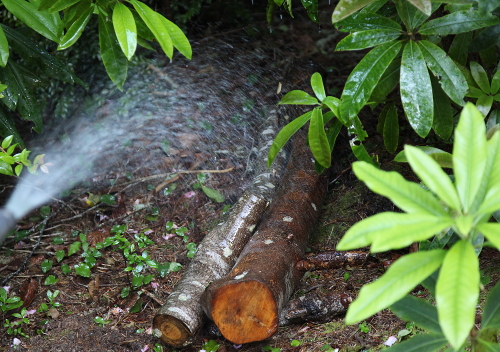
As a final step we watered them, and now we let them do their thing, with occasional watering during dry periods. Hopefully we will have successful inoculation of the logs, and we should be able to start harvesting shiitake mushrooms by next year. We will do this same process with our oyster mushroom plugs soon.

Mushrooms are a great source of essential amino acids and a number of vitamins - including A, B12, C and D. Many mushroom types are supportive to the immune system, have been shown to lower cholesterol and have been found to be cancer-fighting. The medicinal qualities of Shiitake have been well known for many years, and they are delicious too!

Here are a couple of resources for those interested:
Medicinal Mushrooms - http://www.medicalmushrooms.net
Paul Stamets - http://www.fungi.com/about-paul-stamets.html
Shiitake Health benefits (grow kits available too, out of Mississippi) - http://www.naturalmushrooms.com/shiitake_mushroom_medicinal.php

Anyone growing mushrooms at home? I can't wait to see these start to grow!

Monday, June 3, 2013

planting tomatoes

field garden1

Things are moving along nicely in the field garden.

We planted our tomatoes at the end of May and almost forgot that our farmer friend had given us some mycorrhizae for our tomato plants. Earlier in the spring, we visited C. and she mentioned that she was planning to dip her tomato roots in a mycorrhizal solution in hopes of lessening the chances of tomato diseases such as early blight and septoria leaf spot. She doled us out a portion and suggested around 1 tsp per gallon of water.

tomato innoculant
epsom and bone meal

Bone meal and Epsom salts in the planting holes.
dipping roots
Dipping the roots.

A storm arrived in the days following, and we lost 4 of our plants. Luckily, we have extras.

I'm excited to see if the mycorrhizae makes a difference. The four replacement plants won't be dipped in the solution, so it will be easy to see the difference. I'll be sure to report back.

Have any of you tried this? What have you noticed?


Friday, May 31, 2013

front yard garden: year two

Untitled

last summer, one of my big goals was to expand our front yard garden. (i wrote about our plans, with some before photos, here. and then a first look here.) specifically to dig up the grass on one side of the small hill in front of our house and plant a perennial herb and flower garden (the other side of the hill already had a garden planted when we moved in). and so, dig and plant we did last memorial day weekend. i thought i'd post a few photos of how the garden is doing in it's second year.

Untitled

most of the perennials i planted last year came back this year, with the exception of anise hyssop, poppies, and lavender. i was a little bummed about those, but i've added a few more in their places so far this year, and i'll be filling in the rest of the empty spaces with annuals (i have a lot of marigolds!) and maybe some late season sale perennials. even though perennials can be expensive, i always buy them when they're smallest and just know that it'll take a few years for them to grow to a fuller size. they are so worth the investment!

Untitled

this garden is definitely part shade (which is probably why those perennials didn't come back...they needed a sunnier spot?). it's right under a big tree but gets really nice morning light since we are right across the street from a park and there's nothing blocking the light coming from the east. here are some of the plants that are doing well there: borage, french sorrel, columbine, and chives and garlic chives. so far this year, i've added some tickseed and cushion spurge bonfire. i also planted some rogue strawberries that popped up in my backyard vegetable bed...we'll see how those guys do!

so how about you all? how are any new garden spaces that you planted last year doing? any plans for new gardens this year? we'd love to hear.